Your clippers carry fungus from one person to the next. Nail fungus affects 27 percent of people in a 16-country European survey. Debris in the clipper hinge feeds the fungus that spreads.
Shared tools pass a fungal infection between users in one session. Thickened, yellow toenails rarely return to normal on their own. A doctor sets oral antifungal treatment for about three months.
Six steps kill fungus on metal, plastic and porous nail tools. Each step has one rule most home users skip entirely. Start with the tool you use most often each week.
Quick Answer
Alcohol soaks kill fungus on metal clippers. Files, buffers and sponges cannot be disinfected at home. Redness that spreads, warmth or pus means see a doctor fast.
What’s Inside This Guide
- Bleach dilution that works
- Soak time for metal tools
- Tools you must throw away
- Heat that kills fungus
- Storage that keeps tools clean
The 6 Steps At A Glance
A wash removes the debris layer that shields fungus from any chemical. Disinfection kills the germs that stay on a clean, dry surface.
A dirty tool blocks every disinfectant you put on it. Food, skin flakes and nail dust shield the fungus from the label contact time.
- Wash metal tools in warm soap water
- Soak reusable metal in 70 percent alcohol
- Dilute household bleach for a timed soak
- Use hot wash cycles for fabric items
- Toss files, buffers and sponges
- Store dry tools in a closed container
Soap and water remove the debris layer before any chemical. A clean, dry surface lets alcohol reach the metal. The skin side follows the same cleaning order in disinfect wound home steps.
Step 1: Wash The Tool In Warm Soap Water
A wash removes the film that blocks alcohol from the metal. Warm water and soap lift skin flakes and nail dust off the clipper hinge.
Debris in the hinge protects fungus from any spray you put on it. A full dry after the wash matters as much as the wash.
Alcohol cannot reach a tool that still carries dust. A hinge scrub is the step home users rush most often. The same cleaning order is written in clean body piercings routine.
- Rinse the tool under warm running water
- Scrub the hinge with a small brush
- Dry the tool with a paper towel
- Check the hinge for trapped debris
Step 2: Soak Metal Tools In 70 Percent Alcohol
Alcohol breaks down the outer coating of a germ cell. A 70 percent solution carries enough water to keep the surface wet longer.
Pure alcohol evaporates too fast to finish the job on its own. The water content in a 70 percent solution buys the contact time.
Keep the metal wet for 3 to 5 minutes.
Alcohol mixes need 3 to 5 minutes of wet contact time on metal. The skin trade-off sits in alcohol disinfect wounds limits. Pure alcohol is not a wound wash product for clippers.
Alcohol on skin stings, and the sting fades fast. The hand route is written in hand sanitizer wound disinfecting notes. Gel sanitizer is thicker than a liquid soak in a jar.
Step 3: Dilute Household Bleach For A Timed Soak
Bleach works through available chlorine, and the dose decides the result. Household bleach sold for laundry is a 3 to 8 percent sodium hypochlorite solution.
Sprays and wipes for hard surfaces run from 50 ppm to 1.5 percent. Dilution turns a strong product into a usable home soak.
Stock Bleach Strength And Dilution
Bleach strength decides what a soak can kill. The stock bottle sold for laundry runs 3 to 8 percent. A diluted soak uses one part bleach to about ten parts water.
Contact Time Decides The Result
Spores need a higher bleach dose than ordinary bacteria. A quick surface wipe with bleach misses them. Keep the diluted soak wet for 3 to 5 minutes on metal tools.
| Use | Bleach amount | Contact time |
|---|---|---|
| Surface wipe | 50 ppm to 1.5 percent | Label time |
| Metal soak | One part bleach, ten parts water | 3 to 5 minutes |
The skin side carries its own bleach risks. Bleach disinfect wound risks covers that exposure in plain terms. A tool soak needs the same dilution caution in a home sink.
Step 4: Use Hot Wash Cycles For Fabric Items
Fungi are sensitive to heat in the 40 to 60 °C range. A hot wash reaches that temperature across fabric items you cannot soak.
Socks can be cleaned in the wash by adding bleach to the load. A full boil at atmospheric pressure runs 20 minutes for metal tools.
Heat settles the gap that a cold wipe leaves open. Fabric files and soft pads fail this step entirely. The next step explains why those items go in the trash.
- Wash socks at 60 °C
- Add bleach to the laundry load
- Boil metal tools for 20 minutes
- Dry tools fully after boiling
Step 5: Throw Away Porous Nail Tools
Porous tools hold moisture deep inside the material body itself. A file or a buffer cannot be disinfected reliably in a home soak.
The abrasive surface traps nail dust and skin flakes quickly. A nail salon treats these tools as single-use items for exactly that reason.
Nails can house the infection and spread it to others. Shared metal carries fungus to the next user in one session. Prevention habits are listed in fungal skin infection treatment steps.
The same single-use rule covers shared wax applicators in salons. Bikini wax yeast infection risk explains that exposure in detail. The next step covers dry storage after a soak or boil.
- Files and buffers: the grit traps moisture
- Sponges and pumice: the pad warps when wet
- Foam pads: the inside cannot dry
- Wooden sticks: the grain holds water
Step 6: Store Dry Tools In A Closed Container
Damp storage rebuilds the exact conditions fungus needs to grow back. A dry, closed container keeps a disinfected nail tool clean for weeks.
One towel per person and one clipper per person ends the sharing route. NHS advice for athlete’s foot lists a separate towel for feet daily.
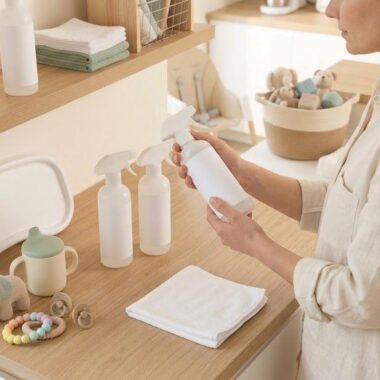
A baby room needs its own separate cleaning plan. Disinfect babys room method covers floors, rugs and fabrics in a nursery. Toys are a separate case in that nursery plan.
Spray products help on nursery surfaces and toys. For a baby’s room, best baby friendly disinfectant spray compares hypochlorous acid options. Read the label for surface use and safe storage.
Wipes and sprays are not the same product at all. Disinfectant wipes versus baby wipes explains that difference for nursery surfaces daily. The same rule matters for shared tool cleaning too.
- Cool the tool before storage
- Place it in a closed container
- Label the date of the last soak
- Keep one tool per person
- Read the label contact time
- Store sprays away from children
- Move baby items out during sprays
- Ventilate the room during sprays
Your Tools Decide The Rules
Metal clippers take alcohol, bleach and a hot wash. Porous files take the trash, and the tool material sets the method you use.
Nail files wear down and trap debris in the abrasive layer fast. Metal clippers keep their shape and take a full alcohol soak.
- Metal clippers and scissors: soak routes
- Glass and ceramic dishes: bleach and heat
- Files, buffers and sponges: single use
- Fabric foot files: hot wash cycles
Sprays and wipes and heat all use measured doses. The terms get mixed in daily speech, and antiseptic and disinfectant differences separates them. Sanitizers are mild, and disinfectants are concentrated surface products.
Phenol products kill germs, and phenols are toxic to cats and newborn humans. Natural options appear in natural disinfectant choices. Vinegar and steam sit at the mild end of that list.
Pet homes should read disinfectant safe for dogs before buying a soak. The label names the active ingredient and the contact time. Phenol products are one example to check on the label.
Open wounds need a gentler route than a nail tool soak. Disinfectant for open wounds types lists that difference in plain terms. Skin and surfaces use different products for a reason.
Salon hygiene is a real factor in shared tool safety. Tattoo shop cleanliness check lists the daily cleaning checks. Shop files follow the same single-use rule as home files do.
Keep one clipper per person, and soak the metal in alcohol after each shared use. A dry and closed container keeps the clean tool clean for the next use session.
Frequently Asked Questions
Can Rubbing Alcohol Kill Fungus On Nail Clippers?
Alcohol kills fungus on metal clippers. A 70 percent solution needs the full contact time.
- Submerge the clipper in a small jar
- Keep the metal wet for 3 to 5 minutes
- Check the hinge for trapped debris
- Dry the tool before storage
- Replace cloudy alcohol in the jar
Can I Reuse A Disposable Nail File?
No. Porous files cannot be disinfected reliably.
- The grit traps moisture inside
- A salon file is single use
- Home files wear and trap debris
- A worn file cannot be soaked clean
How Do Nail Salons Disinfect Their Tools?
Salons disinfect reusable metal tools between clients. Disposables go in the trash after one client use.
- Metal tools go in a soak
- Disposables are tossed after one client
- Surfaces are wiped per client
- An autoclave sterilizes metal tools
- Staff wash hands between clients
What Kills Nail Fungus On Shoes And Socks?
A hot wash handles fabric items. Dry shoes between uses, and never share them with housemates.
- Wash socks at 60 °C
- Add bleach to the laundry load
- Wipe shared pedicure tools after use
Do I Need A Doctor For A Fungal Nail Infection?
See a doctor for thickened, painful nails. A pharmacist or doctor sets the dose.
- Pharmacy antifungal creams take weeks
- Oral treatment runs for about three months
- A hot red foot needs urgent care the same day
- Diabetes makes a foot infection more serious
- A weak immune system raises the infection risk