
It happens fast. A diaper blowout hits the changing table, you grab the nearest baby wipe, swipe it across the surface, and move on with your day feeling like the job is done. That instinct makes sense. The wipe looks clean, smells fresh, and picked up the visible mess. But a wiped-down surface and a disinfected one are not the same thing, and that gap matters more in a nursery than almost anywhere else in the house.
Parents reach for baby wipes out of habit because they are already in every diaper bag and on every changing table. The trouble is that a product built to gently clean a baby’s skin was never designed to kill the germs living on a crib rail, a play mat, or a diaper pail lid. Understanding the difference is not about creating extra worry. It is about knowing which tool to reach for so that cleaning routines actually protect your baby instead of just looking tidy.
This guide breaks down exactly how baby wipes and disinfectant wipes differ, why swapping one for the other can cause real problems, and how to disinfect a nursery safely without exposing your baby to harsh chemical residue. You will also find a simple step-by-step routine and answers to the questions parents ask most often about keeping a baby’s room clean and safe.
The Short Answer: No, They Serve Completely Different Purposes
Baby wipes and disinfectant wipes are not interchangeable, and the short answer to are baby wipes as effective as disinfectant wipes is no. The two products are built to do different jobs. Baby wipes are designed to cleanse skin, which means physically lifting away dirt, oils, and organic matter using water and mild surfactants. Disinfectant wipes are designed to sanitize surfaces, which means chemically breaking down the cell walls of bacteria and viruses so they can no longer spread.
This is the root of a common misunderstanding: many parents assume that any wipe that feels wet and smells clean must also be killing germs. It does not work that way. Cleaning removes visible mess and reduces the number of germs on a surface, while disinfecting actively destroys the germs that remain. Skipping the disinfecting step, or assuming a baby wipe covers it, can leave a surface looking spotless while pathogens are still present.
Direct Comparison: Baby Wipes vs. Disinfectant Wipes
Seeing the two products side by side makes the difference easier to picture.
| Feature | Baby Wipes | Disinfectant Wipes |
|---|---|---|
| Primary Purpose | Cleanse a baby’s skin by lifting dirt, oils, and organic matter | Chemically destroy germs, bacteria, and viruses on hard surfaces |
| Active Ingredients | Water, mild surfactants, aloe vera, and skin conditioners | Alcohol, bleach, or quaternary ammonium compounds (quats) |
| Germ-Killing Ability | Very low, not formulated to kill pathogens | Built specifically to destroy the cell walls of germs |
| Surface Residue | Leaves a soapy, non-sterilized film behind | Leaves surfaces sanitized when used correctly |
| Skin Safety | Formulated to be gentle on delicate baby skin | Can strip skin lipids and cause irritation, never for use on skin |
The takeaway is straightforward. Baby wipes are the right choice for your baby’s body. Disinfectant wipes are the right choice for hard, non-porous surfaces. Neither product is a safe substitute for the other.
The Dangerous Mix-Up: Why You Can’t Swap Them
Why Baby Wipes Fail on Nursery Surfaces
Baby wipes do not contain alcohol, bleach, or the other active ingredients that disinfectant wipes rely on to break down pathogens. When a baby wipe is used on a changing table, crib rail, or diaper pail, it can pick up visible mess, but it does not neutralize the germs underneath. In many cases, it simply spreads them across a wider area and leaves behind a soapy residue that is not actually sanitized. A surface can look and smell clean while still carrying live bacteria or viruses, which is exactly the false sense of security that makes this mix-up so common.
The Hazard of Disinfectant Wipes on Skin
The reverse mistake carries a different kind of risk. Surface disinfectants, including common household brands like Lysol or Clorox wipes, are formulated with ingredients strong enough to strip skin lipids and break down germ cell walls. Those same ingredients can quickly irritate a baby’s skin, which is thinner and more sensitive than adult skin. Using a surface wipe near a diaper area or on a baby’s hands and face can lead to contact dermatitis, rashes, or in more severe cases, chemical burns. Chemical wipes and skin-safe baby wipes should be treated as two completely separate categories, never stored or reached for interchangeably.
Step-by-Step: How to Safely Disinfect Your Baby’s Room
Disinfecting a nursery correctly is not about choosing one product over the other. It means using both, in the right order, for the right purpose.
Step 1: Pre-Clean the Area
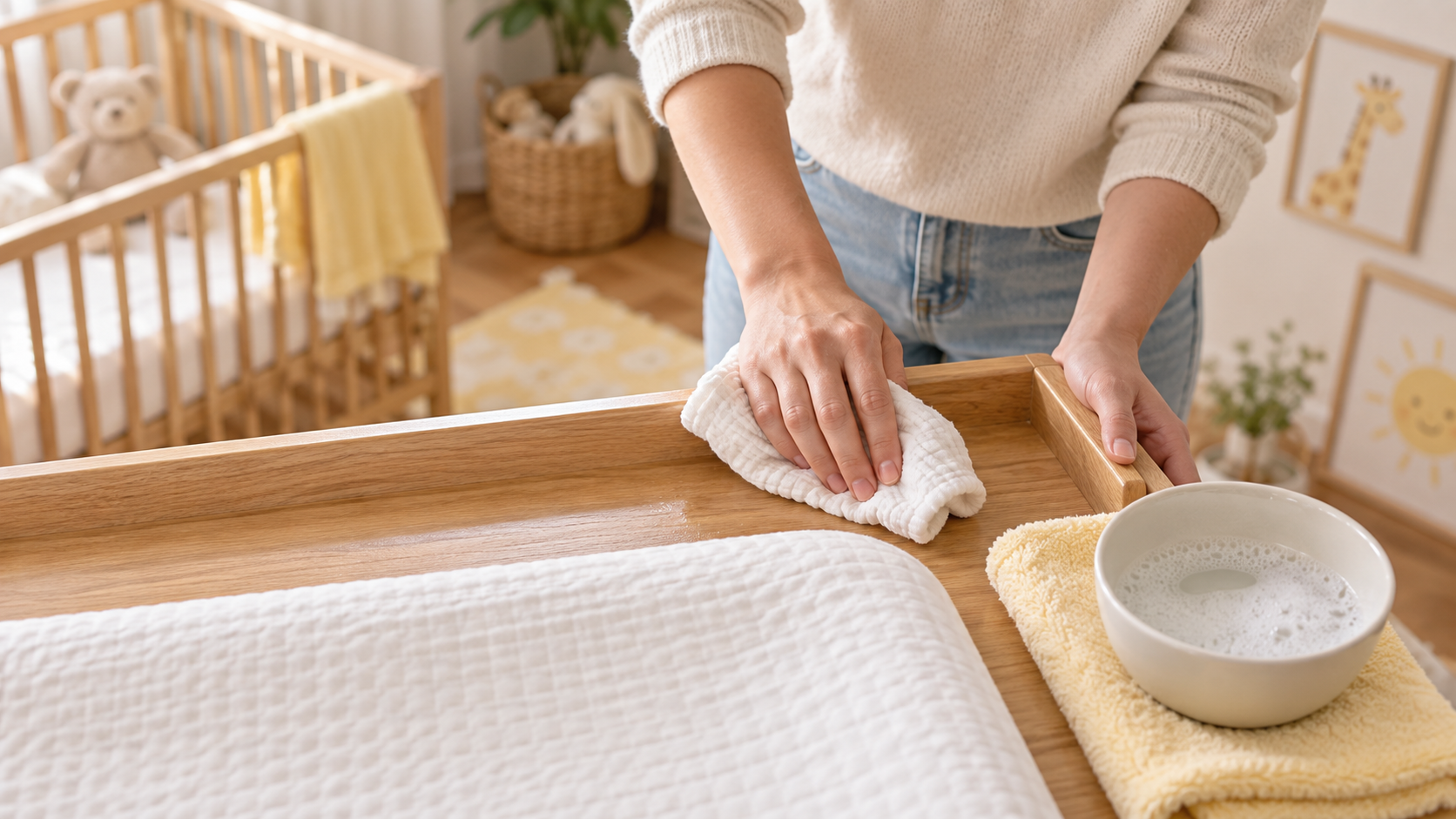
Before any disinfectant can work, organic matter like spit-up, diaper leaks, or dust needs to come off the surface first. Wipe the area down with a baby wipe or a cloth and mild soapy water to remove this buildup. Disinfectants are far less effective when they have to fight through a layer of grime, so this step is not optional, even though it can feel repetitive.
Step 2: Apply the Disinfectant and Watch the “Wet Time”
Once the surface is pre-cleaned, apply an EPA-registered surface wipe or a baby-friendly disinfectant spray made for non-porous surfaces. The surface needs to stay visibly wet for the amount of time listed on the product label. This “wet time” is not a suggestion. It is the window the chemical needs to fully break down the cell walls of bacteria and viruses. Wiping the surface dry too soon can leave germs behind even though the product itself was strong enough to work.
Step 3: Rinse High-Contact Surfaces and Toys
After the disinfectant has fully dried, go back over high-touch areas and anything your baby puts in their mouth with a clean, damp cloth and plain water. This rinses away chemical residue before your baby’s hands or mouth come into contact with the surface. For hard, non-porous items like wooden educational toys or stacking rings, a quick wipe-down with soapy water followed by a rinse is usually enough, since soaking or machine washing can warp the wood. Soft plush toys are a different category entirely and are generally safer to run through the washing machine according to their care label rather than treating them with surface disinfectants.
Safe On-the-Go Hygiene Hacks for Parents
Nursery routines are one thing, but hygiene outside the house is where baby wipes get misused the most. Many parents reach for a baby wipe to clean their own hands after a diaper change in a public restroom or before feeding a baby a snack, assuming it offers the same protection as handwashing. Since baby wipes are not formulated to kill germs, they are not a reliable substitute for proper hand hygiene when soap and water are not available.
A better option is to carry alcohol-based hand wipes or a hand sanitizer with at least 60 percent alcohol, which is the minimum concentration health experts recommend for reducing germs on hands when a sink is not an option. Keep this separate from your baby’s diaper bag wipes so there is no risk of grabbing the wrong pack in a rush.
Final Nursery Safety Tips
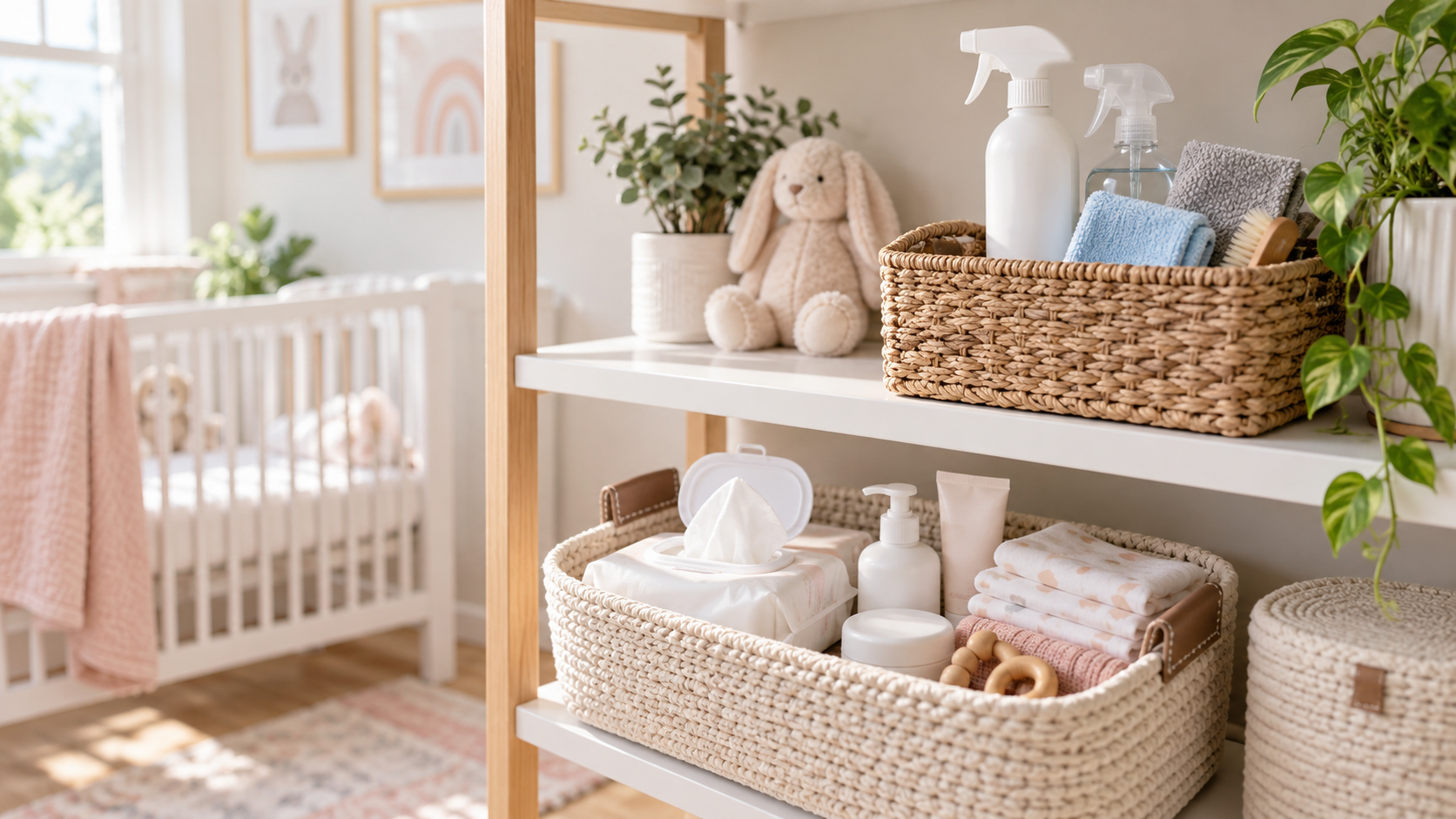
The easiest way to prevent a dangerous mix-up is to physically separate the two categories of wipes. Store chemical surface wipes and sprays on a high shelf or in a cabinet away from the changing table, and keep baby wipes within easy reach at the diaper station only. This small habit matters most during the middle-of-the-night changes, when it is easiest to grab the wrong product without fully registering what it is. A little bit of organization now prevents a stressful and avoidable mistake later.
Conclusion
Are baby wipes as effective as disinfectant wipes? No, and understanding why is the key to keeping a nursery both clean and safe. Baby wipes are built to gently cleanse your baby’s skin, while disinfectant wipes are built to chemically destroy germs on hard surfaces. Treating cleaning and disinfecting as two separate steps, pre-cleaning surfaces before applying a disinfectant, respecting the wet time on the label, and rinsing high-touch areas afterward gives your baby’s room real protection instead of the appearance of it. Just as importantly, keeping chemical wipes physically separated from your baby’s diaper station protects delicate skin from irritation and chemical exposure. With the right product for the right job, and a simple routine to follow, you can keep your baby’s space genuinely clean without added risk.
Baby Wipes Related Questions
Can I use a baby wipe to sanitize my baby’s changing table or toys?
No. A baby wipe can lift away visible dirt and spit-up, but it does not contain the active ingredients needed to kill germs. Using one on a changing table or toys will leave the surface looking clean while bacteria and viruses may still be present. Follow up with an EPA-registered disinfectant wipe or spray on hard, non-porous surfaces for actual sanitizing.
What happens if you accidentally use a surface disinfectant wipe on a baby’s skin?
Surface disinfectants are formulated with strong ingredients like alcohol, bleach, or quats that can strip natural skin lipids almost immediately. On a baby’s more sensitive skin, this can lead to redness, dryness, contact dermatitis, or in more severe cases a chemical burn. If this happens, rinse the area with plain water right away and contact your pediatrician if irritation persists.
What is the safest way to disinfect a baby’s room without leaving toxic chemical residue?
Pre-clean surfaces first to remove organic matter, then apply an EPA-registered disinfectant and let it sit for the full wet time listed on the label. Once it has dried, go back over high-touch areas and anything your baby mouths with a clean, damp cloth and plain water to rinse away any leftover chemical residue before your baby comes into contact with the surface.
Why do disinfectant wipes need to remain visibly wet on a surface to work?
Disinfectants need continuous contact time to fully break down the cell walls of bacteria and viruses. This required period is often called the “wet time,” and it is listed on the product label. Wiping the surface dry before that time has passed can stop the chemical reaction partway through, leaving some germs still active even though the product itself was effective.
How should parents sanitize their hands on the go if baby wipes don’t kill germs?
When soap and water are not available, reach for an alcohol-based hand wipe or a hand sanitizer containing at least 60 percent alcohol instead of a baby wipe. This concentration is the level health experts recommend for reducing germs on hands. Keep it in a separate pouch from your baby’s diaper bag wipes so the two are never mixed up in a hurry.